MVP vs Prototype vs Proof of Concept: What to Build and When
When it comes to launching a new product or startup, the terms MVP, prototype, and proof of concept (PoC) are often used interchangeably. Unfortunately, they are very different, and confusing them can lead to wasted time and effort. Many startups skip early idea validation, which increases the risk of choosing the wrong approach.
Deciding which to build—and when—is a key early step in any software development journey. In this article, we’ll break down each approach, explain the differences, and show how to choose the right one for your situation. We’ll also cover common mistakes startups make and highlight strategies to make your MVP or prototype scalable and efficient.

What Is a Proof of Concept (PoC)?
A proof of concept is the earliest stage in validating an idea. Its main purpose is technical feasibility: can this idea work at all?
1. Key Features of a PoC
- Focused scope: Usually addresses one core hypothesis.
- Quick development: Often built by a single developer or small team.
- No end users: Not meant for public release; it’s for internal validation.
- High risk tolerance: Functionality may be crude or incomplete.
For example, if your startup idea involves real-time video analytics, a PoC might be a small script that processes one video feed to confirm your algorithm works. You’re not building the full product yet; you’re just proving that the core concept is possible.
What Is a Prototype?
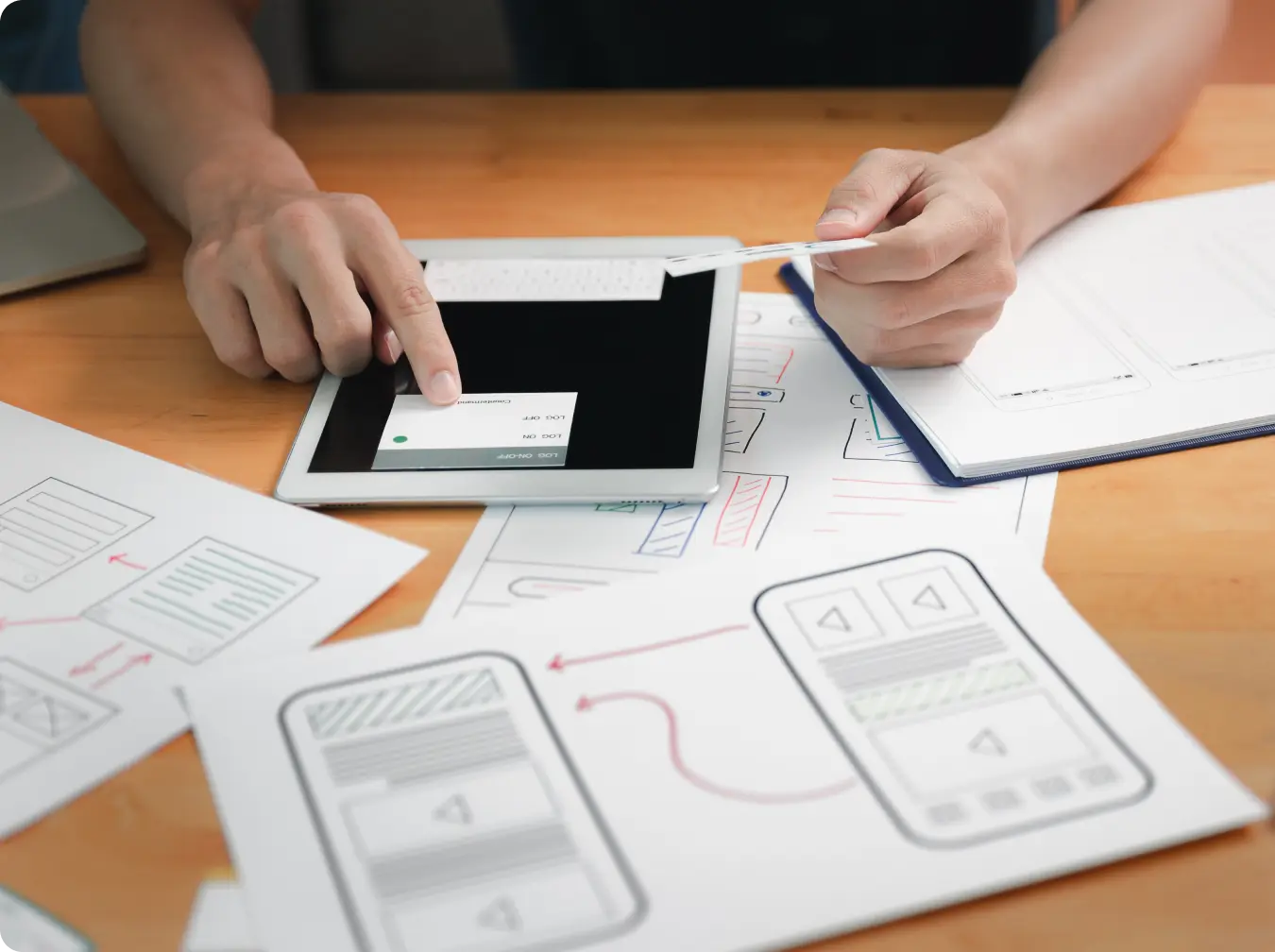
A prototype is the next step after a PoC. While a PoC tests feasibility, a prototype tests design and usability.
1. Key Features of a Prototype
- Interactive: Can be clicked through, but not fully functional.
- User-focused: Aims to test user flows and interface concepts.
- Internal or small audience: Sometimes shared with investors or early testers.
- Medium fidelity: Looks and feels like the product, but not all features work.
Prototypes help answer questions like:
- Do users understand the workflow?
- Are key features intuitive?
- What should be prioritized in development?
For mobile apps, this might involve using tools like Figma or InVision to build interactive screens without writing backend code.
What Is an MVP?
A Minimum Viable Product (MVP) is a functional product designed to deliver value to real users while testing core hypotheses. Unlike PoCs or prototypes, an MVP is live in the market.
1. Key Features of an MVP
- Functional: Users can perform core tasks.
- Market-ready: Can be released publicly.
- Focused: Only includes essential features.
- Feedback-driven: Designed to learn from early users.
MVPs are not prototypes with a few more buttons—they’re the smallest functional version of your product that can be tested with real users.
If you want to see how experienced teams approach MVPs for software products, check out our detailed guide on custom MVP software development.
Differences Between PoC, Prototype, and MVP
Although proof of concept, prototype, and MVP are often mentioned together, they serve very different purposes. Understanding these differences helps teams avoid building the wrong thing at the wrong time.
1. Proof of Concept (PoC)
A proof of concept is focused entirely on technical feasibility.
- Its goal is to answer: Can this idea actually work?
- It is usually built quickly and kept internal.
- There is little to no concern for usability, design, or scalability.
- It does not involve real users or market validation.
A PoC is successful if it proves (or disproves) a single technical assumption. Nothing more.
2. Prototype
A prototype shifts the focus from technology to user experience.
- Its goal is to answer: Does this make sense to users?
- It is often interactive but not fully functional.
- It may be shared with stakeholders, investors, or a small group of testers.
- It emphasizes design, flow, and clarity rather than backend logic.
Prototypes are especially useful when teams need feedback on navigation, layout, or feature prioritization before committing to full development.
3. Minimum Viable Product (MVP)
An MVP is the first version of a product that delivers real value to real users.
- Its goal is to answer: Do users want this enough to use or pay for it?
- It is functional and market-ready, even if limited in scope.
- It includes only the features required to solve the core problem.
- It is built to gather feedback and guide future iterations.
Unlike PoCs and prototypes, MVPs live in the real world. They must balance speed, usability, and technical decisions that won’t block growth later.
4. The Key Difference in Simple Terms
- PoC proves that something can be built.
- Prototype shows how it might work for users.
- MVP tests whether it should exist in the market.
Choosing the right one depends on what you’re trying to learn at that moment—not on how fast you want to ship.
"Prototypes are designed to answer questions, not to ship products. PoC proves it can work. Prototype shows how it works. MVP proves it should exist.”
- Tom Chi
When to Build a Proof of Concept
A PoC is ideal when your idea involves unknown technical challenges. Common situations include:
-
New technology or algorithm
Example: Developing an AI feature to analyze customer support tickets. -
Integration complexity
Example: Combining multiple APIs or platforms with unknown compatibility. -
Risk mitigation before investment
Example: Demonstrating feasibility to stakeholders or investors.
PoC Mistakes to Avoid:
- Trying to make it market-ready. PoCs don’t need polish.
- Overbuilding features. Focus on the single hypothesis.
- Skipping documentation. Even a small PoC should clearly show results.
When to Build a Prototype
Prototypes are useful when you need to understand user behavior or validate the UI/UX.
Typical scenarios:
- Testing navigation flows for a mobile app.
- Collecting feedback from early users or stakeholders.
- Preparing for fundraising by showcasing a tangible product concept.
Prototype Tips:
- Keep fidelity appropriate to the stage (don’t overbuild).
- Include only key screens or flows.
- Use interactive mockups to simulate experience without full development.
When to Build an MVP
An MVP is the right choice when you want to launch something users can interact with to validate your business assumptions.
Examples of MVP scenarios:
- You have a validated idea and want to test the market. At this stage, defining a realistic MVP development timeline helps align scope with speed.
- You need early adopters to provide feedback on features.
- You want to start generating revenue while iterating.
Core Considerations for MVP Success:
- Focus on essential features: Only include what’s needed to solve the main problem.
- Plan for scalability: Avoid shortcuts that can’t evolve later. Early MVP decisions often shape your product’s architecture long after launch. Poor early planning can also significantly increase development costs over time.
- Feedback loop: Include mechanisms to collect user feedback early.
For guidance on how to build a practical, scalable MVP, check out our MVP development services.
Common Keyword Questions in Context
To ensure this article targets search effectively, let’s map the keywords naturally:
- MVP vs prototype: Covered in sections defining MVP and prototype.
- MVP vs PoC: Covered in “Differences” table and scenario examples.
- Prototype vs PoC: Clarified in table and “When to build a PoC/Prototype” sections.
- Difference between MVP and prototype: Explained in the “Differences” table and paragraphs.
- Proof of concept vs MVP: Addressed in early sections and “When to build an MVP/PoC.”
- When to build an MVP / MVP vs prototype for startups: Covered in “When to Build an MVP” section.
- Prototype vs MVP for mobile apps: Mentioned under prototype examples.
- Do I need an MVP / alternatives to MVP: Implied in PoC and prototype discussions.
By naturally answering these questions, the article positions your site as a trusted resource and improves chances for search visibility.
How to Decide What to Build
A simple decision framework:
- Is the idea technically uncertain? → PoC
- Do you need to validate user experience? → Prototype
- Do you want to test the market? → MVP
This framework helps startups save time and resources while avoiding the common mistake of building a feature-heavy MVP too early, which can slow feedback, increase costs, and become one of the main reasons MVPs fail.
MVP Decisions That Affect Long-Term Success
Even though MVPs are “minimum,” some decisions have long-lasting effects:
1. Technology Stack
Choose tools that allow flexibility. A framework that’s easy to maintain can prevent headaches later.
2. Data Architecture
Early schema choices often persist. Think about growth even if your first release is small.
3. Feature Scope
Prioritize core functionality. Every unnecessary feature increases technical debt.
4. Performance Assumptions
Even MVPs need to handle expected user behavior. Overlooking performance can create bottlenecks later.
Avoiding MVP Pitfalls
Common mistakes include:
- Confusing MVP with prototype → You test users too early with incomplete functionality.
- Building too many features → Delays feedback and increases costs.
- Ignoring scalability → Early decisions can restrict future growth.
- Skipping user feedback → MVPs exist to learn, not just to release.
By aligning MVPs, prototypes, and PoCs with their correct purpose, teams avoid costly missteps and ensure faster learning.
Conclusion
Choosing between a PoC, prototype, and MVP is more than semantics. Each serves a distinct purpose in validating ideas, testing usability, and launching products.
- PoC proves technical feasibility.
- Prototype validates user experience.
- MVP tests the market with real users.
Startups that understand these differences save time, reduce risk, and increase the likelihood of building a successful product.
Remember: the MVP is not a mini-final product. Treat it as a learning tool, build intentionally, and plan for evolution. If done right, your MVP lays the foundation for a scalable, market-ready solution.
For deeper guidance on building practical MVPs that balance speed, usability, and scalability, explore our custom MVP software development guide or learn about our MVP development services.